
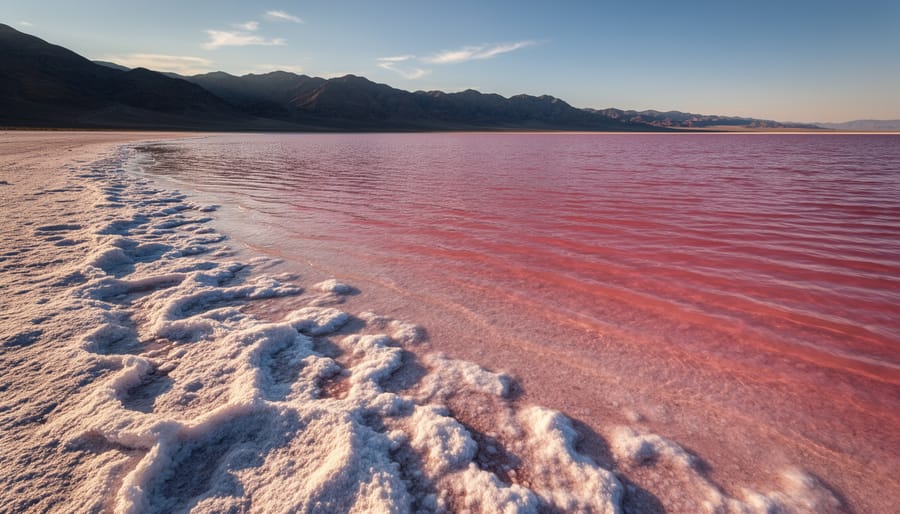
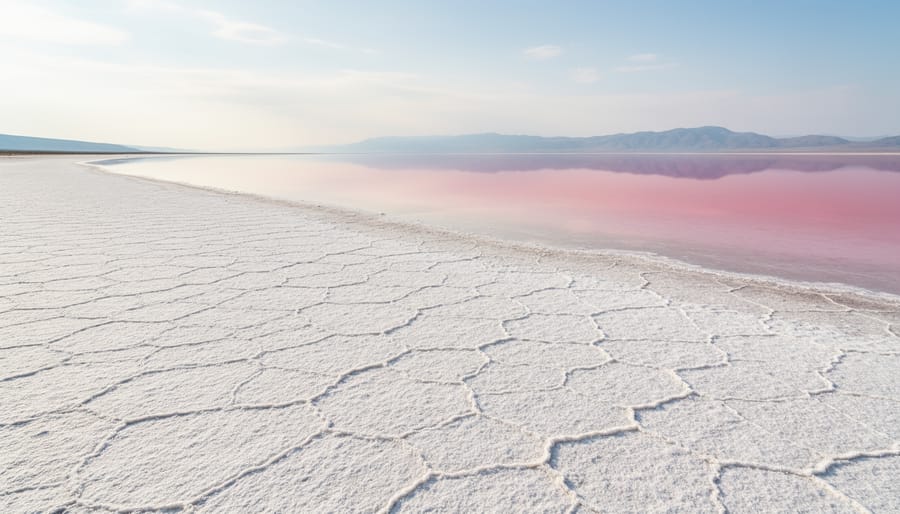
Utah’s pink lake isn’t just one spot. You’ll find two stunning bubblegum-hued shores along the Great Salt Lake: one at Stansbury Island, about 40 miles west of Salt Lake City, and another in the northern bay near the famous Spiral Jetty. Both glow their otherworldly pink thanks to billions of salt-loving microorganisms called halophiles and the minerals they produce, turning these shallow bays into what looks like a pool of strawberry milk against Utah’s desert mountains.
Getting there is easier than you might think. The road to Stansbury Island is well graded and doesn’t require a 4WD or high-clearance vehicle, though you’ll want to take it slow over the washboard sections. The lake sits on public land managed through Great Salt Lake State Park, which means you can visit from sunrise to sunset during summer months. Just know that the pink intensity shifts with water levels, salinity, and temperature, so what you see depends partly on when nature decides to put on the show.
This isn’t a polished tourist attraction with guardrails and gift shops. You’re heading to raw, remote shoreline where the salt crunches underfoot and the silence stretches for miles. The lack of facilities is part of the magic. Bring everything you need, plan for dirt roads and big skies, and prepare to experience one of Utah’s most surreal natural phenomena. Whether you’re chasing that perfect Instagram shot or simply want to float in water saltier than the ocean, these pink lakes deliver something you won’t find in a typical state park.
Why Visit Utah’s Pink Lakes
Utah’s pink lakes deliver an experience that feels more Mars than Earth, yet sits just a short drive from downtown Salt Lake City. The vivid color comes from halophilic bacteria and algae that thrive in the Great Salt Lake’s hypersaline waters, microscopic organisms that produce red and pink pigments as protection against the intense ultraviolet light and high salt concentrations. When water levels drop and salinity increases, these salt-loving microbes bloom in spectacular fashion, transforming sections of the lake into pools of rose, coral, and magenta that shift with the light throughout the day.
The Great Salt Lake has always been a dynamic ecosystem, with water levels rising and falling over decades in response to precipitation patterns and water diversion. In recent years, lower water levels have concentrated salinity in certain bays and coves, intensifying the conditions that produce the most dramatic pink coloration. This environmental shift has revealed landscapes that seem lifted from another planet, vast salt flats stretching to the horizon, crusty shorelines sparkling with mineral deposits, and shallow pools glowing pink beneath wide Utah skies.
For photographers, the lakes offer endless compositional possibilities. The color pops against the stark desert backdrop, especially during golden hour when warm light amplifies the pink tones. Unlike famous pink lakes in Australia or Senegal that require expensive flights and complex logistics, Utah’s pink lakes welcome families with straightforward access. Kids can safely explore the salt flats, adults can capture Instagram-worthy shots, and everyone leaves with a story about the day they saw water the color of strawberry milk stretching across a desert landscape.
Utah’s Two Pink Lake Locations
1. Stansbury Island Pink Lake
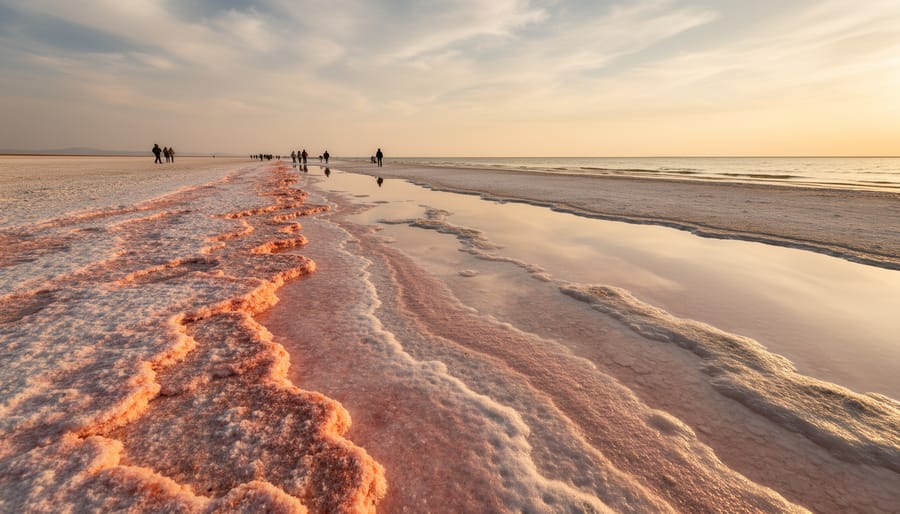
The southwestern shore of the Great Salt Lake at Stansbury Island offers the most accessible pink lake experience in Utah, sitting about 40 miles west of Salt Lake City. This location strikes a perfect balance between adventure and convenience, making it ideal for families with kids, first-time visitors, and anyone who wants to witness the phenomenon without an intense backcountry journey.
Getting to the Stansbury Island pink lake is straightforward. You’ll head west from the city through flat terrain that gradually transitions from urban sprawl to wide-open Great Basin landscape. The access road is well graded, which means you won’t need a high-clearance 4WD vehicle, a regular sedan can make the trip in good conditions. That’s a huge advantage over many remote Utah destinations that demand serious off-road capability.
When you arrive, the landscape unfolds in surreal beauty. The pink water meets white salt-encrusted shorelines, creating a stark contrast against the blue sky and distant mountain ranges. The intensity of the pink varies with light conditions and the concentration of halophilic organisms in the water, you might see anything from soft rose tones to vivid magenta. The surrounding terrain is flat and open, which means kids can explore safely within sight while you snap photos.
What makes this spot particularly family-friendly is the ease of access once you arrive. There’s no strenuous hiking involved, and you can get close to the water’s edge without navigating rough trails. The shallow bays and salt flats create natural viewing platforms where visitors can safely experience this otherworldly environment. Just remember that the exposed landscape offers zero shade, so plan accordingly and bring what you need to stay comfortable in the desert sun.
2. Northern Bay Pink Lake by Spiral Jetty
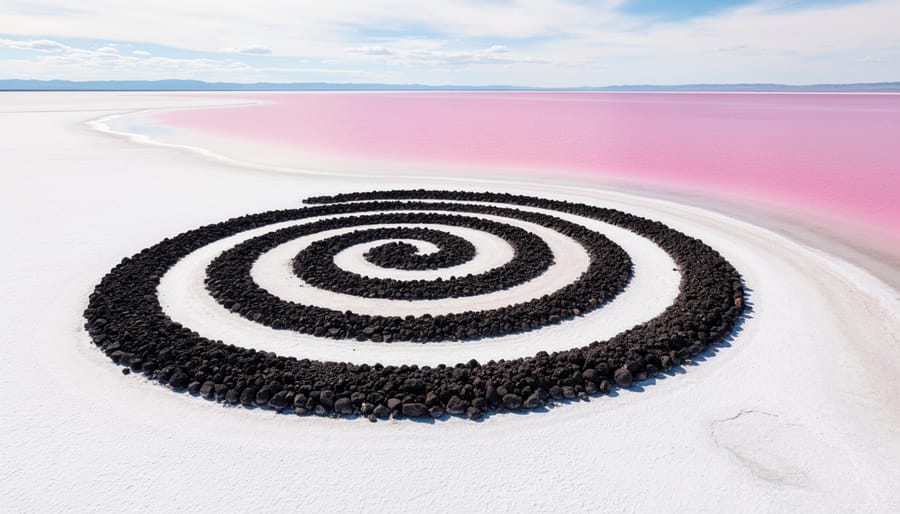
The northern bay pink lake sits roughly 90 miles north of Salt Lake City near Rozel Point, where Robert Smithson’s Spiral Jetty curls into the Great Salt Lake’s waters. This destination offers something fundamentally different from Stansbury Island: you’re visiting two landmarks at once. The 1,500-foot earthwork sculpture, built in 1970 from mud, salt crystals, and basalt rocks, has become one of America’s most recognized land art installations. When water levels permit visibility, the jetty’s coil extends into the same pink waters that draw lake seekers.
The drive here takes commitment. You’ll navigate roughly 16 miles of gravel road beyond the tiny settlement of Corinne, passing through remote terrain where cell service disappears and the landscape opens into salt flats and sage. The road surface varies with weather and maintenance, so allow extra time and watch for ruts after storms.
What you get for that effort is solitude and scale. While Stansbury Island attracts families and casual visitors, this location appeals to photographers chasing dramatic compositions, art pilgrims making the trek to see Smithson’s work in person, and adventurers who prefer remote experiences to accessible ones. The pink water here can appear more vivid against the black basalt of the jetty, creating striking contrasts that don’t exist at the southern location.
Visit this spot if you want an all-day adventure rather than a quick stop, if you’re already familiar with backcountry driving, or if seeing the Spiral Jetty ranks as high on your list as witnessing the pink phenomenon itself. The isolation means you’ll likely share the space with just a handful of other visitors, even on weekends.
3. Great Salt Lake State Park
Great Salt Lake State Park serves as an excellent home base for anyone planning to explore Utah’s pink lakes. Located on the southern shore of the Great Salt Lake, the park puts you within reach of both pink lake locations while offering amenities that make your visit more comfortable and informative.
The visitor center is your first stop for understanding what makes these lakes turn pink. Rangers and exhibits explain the science behind the halophilic bacteria and algae that create the distinctive coloration, along with the broader ecosystem of the Great Salt Lake. You’ll find maps showing current conditions and access routes to both the Stansbury Island location and the northern bay near Spiral Jetty. This is valuable information since lake levels and road conditions can shift.
The park also provides basic facilities that wilderness areas around the pink lakes lack, restrooms, picnic areas, and boat ramps if you’re interested in getting out on the water. After driving dusty washboard roads to see the pink waters, these amenities are genuinely appreciated.
During summer, the park is open from sunrise to sunset, and the visitor center operates Monday through Thursday from 11:00am to 7:00pm and Friday through Sunday from 9:00am to 8:00pm. Stop in before heading out to the pink lakes to get current access information and pick up any permits you might need, drone use and metal detecting both require inexpensive permits at just a dollar each.
Practical Information for Visiting

Planning a visit to Utah’s pink lakes requires some preparation, but you won’t need specialized equipment or extensive permits. The accessibility is part of what makes these natural wonders perfect for families and casual visitors.
The Great Salt Lake State Park keeps summer hours for the park from sunrise to sunset, giving you plenty of daylight to explore. The Visitor Center operates Monday through Thursday from 11:00am to 7:00pm and Friday through Sunday from 9:00am to 8:00pm. Stop by the center first if you want maps, current conditions updates, or background on the lake’s ecosystem.
You won’t need a 4WD or high-clearance vehicle to reach the Stansbury Island pink lake, though the well-graded access road does get washboard-rough in places. Any standard car can make it if you take it slow. The northern bay location near Spiral Jetty involves a longer drive on unpaved roads, so check current conditions before heading out.
| Detail | Information |
|---|---|
| Park Hours | Sunrise to sunset (summer) |
| Visitor Center Hours | Mon-Thu 11am-7pm, Fri-Sun 9am-8pm |
| Vehicle Requirements | No 4WD needed, standard car works |
| Drone Permit | $1.00 (required) |
| Metal Detecting Permit | $1.00 (required) |
| Distance from Salt Lake City | About 40 miles west |
Pack plenty of water, sun protection, and snacks since services are limited once you leave the main highway. The exposed salt flats offer zero shade. Fill your gas tank before you leave Salt Lake City. If you plan to fly a drone or use a metal detector at the state park, pick up your permits for a dollar each at the visitor center.
Parking at Stansbury Island is informal. Pull off where the road ends near the shoreline. There are no marked spaces or facilities, so bring out everything you bring in.
What to Expect When You Arrive
The pink lakes won’t always look Instagram-perfect, and that’s part of their wild charm. The intensity of the color shifts with water salinity, algae concentration, time of day, and recent weather. Some visitors arrive to find a soft peachy blush, while others encounter deep magenta that looks almost unreal. The color typically appears strongest during warmer months when salinity rises and algae bloom. Overcast days can mute the hues, while bright midday sun often bleaches them out.
You’ll step into a stark, otherworldly landscape, miles of white salt flats stretching toward distant mountain ranges, shallow pools reflecting the sky, and crystallized salt formations crunching underfoot. The air smells faintly saline and organic. The shoreline isn’t a typical beach; expect exposed lakebed, salt crusts that can be sharp on bare feet, and muddy patches near the water’s edge. Wear closed-toe shoes you don’t mind getting dirty.
For photography, the pink tones pop best during golden hour, early morning or late afternoon when the warm light enhances the natural color contrast. Shoot from a low angle to capture reflections in the shallow water. Include the surrounding landscape for scale and context rather than zooming in tight on the water alone. A polarizing filter can help reduce glare and intensify color saturation if you’re shooting with a camera.
The experience feels remote and humbling. Bring patience for the drive and an appreciation for natural processes that don’t perform on demand. The imperfection is what makes it memorable.
Local Tips from Fort Smith Explorers
Before you pack the car, take a few minutes to prepare properly, the Great Salt Lake’s remote setting and exposed conditions demand some forethought. Veterans who’ve made the trip multiple times, including families from Fort Smith who’ve discovered these pink waters while exploring fun outdoor activities throughout the region, emphasize these essentials:
- Fill your tank completely before leaving Salt Lake City, no services exist along the route
- Pack at least twice as much water as you think you’ll need, especially from May through September
- Bring wide-brimmed hats, sunglasses, and high-SPF sunscreen for everyone in your group
- Load camera gear with extra batteries and memory cards, the pink hues photograph beautifully but you’ll take more shots than expected
- Stay on established paths and avoid walking directly on salt crusts, which protect delicate microbial communities
- Carry out everything you bring in, including food wrappers and water bottles
- Plan for a half-day excursion minimum to drive out, explore both the shore and surrounding landscape, and return without rushing
- For young children, bring activities for the drive and snacks to keep energy up, the washboard road can feel long to restless kids
The journey itself offers rewards beyond the destination. Families accustomed to visiting Fort Smith parks will find the drive across Utah’s high desert strikingly different, with wide-open vistas and glimpses of local wildlife adapted to salt flats, pronghorn antelope, coyotes, and migratory shorebirds. Consider extending your adventure by researching where to camp near the Great Salt Lake if you want a slower-paced visit that includes sunrise or sunset photography, when the pink tones intensify. Respect the fragile ecosystem by observing from the shore rather than wading in, and remember that these halophilic organisms thrive in conditions inhospitable to most life, treat them with the care they deserve.
Frequently Asked Questions
Is the water always pink?
The intensity of the pink color varies based on water temperature, salinity levels, and sunlight. You’ll see the most vibrant pink hues during warmer months when the halophilic bacteria and algae are most active, though some pink coloration is typically visible year-round.
Can you swim in the pink lakes?
While the water won’t harm you, swimming isn’t recommended due to the extremely high salt content, muddy bottom conditions, and the fragile ecosystem. The shallow shoreline areas also contain sharp salt crystals that can cut feet.
What causes the pink color?
The distinctive pink hue comes from halophilic bacteria and algae that thrive in the lake’s high-salinity environment. These microorganisms produce red and pink pigments as they process salt and sunlight.
How long does a visit take?
Most visitors spend 1-2 hours at the pink lake locations, including drive time on the access roads and time for photography and exploring the shoreline. Factor in additional time if you’re combining your trip with the Spiral Jetty or Great Salt Lake State Park Visitor Center.
What vehicle do I need for the trip?
A regular passenger vehicle works fine for Stansbury Island, though the washboard road requires taking it slow. You don’t need 4WD or high clearance, but a vehicle with decent ground clearance handles the bumps more comfortably.
Beyond these basics, remember that no special permits are required for simply visiting and photographing the pink lakes. The $1.00 permits at Great Salt Lake State Park only apply if you’re flying a drone or metal detecting. Most families find the trip straightforward once they know what to expect from the road conditions and bring adequate water and sun protection for the exposed environment.
Utah’s pink lakes offer something genuinely special, a chance to witness nature’s artistry without traveling halfway around the world. Whether you’re a Fort Smith local planning a weekend adventure or visiting the area, these vibrant shorelines deliver an experience that’s both accessible and awe-inspiring for families and solo explorers alike.
The drive itself becomes part of the story, and the payoff is a landscape that’ll stick with you long after you’ve washed the salt dust off your boots. Just remember that these fragile ecosystems depend on our care. Stick to established paths, pack out everything you bring, and leave the shoreline as pristine as you found it.
The Great Salt Lake State Park serves as your gateway and guide to understanding this unique environment, with resources that turn a simple visit into a deeper appreciation of what makes this place tick. Plan your trip, fill your water bottles, and head out to see why Utah’s pink lakes have captured the imagination of nature lovers across the region.