
Nestled in Vermont’s rolling hills, alpaca farms offer a surprisingly magical escape that combines gentle animal encounters with genuine agricultural education. These working farms have opened their gates to visitors seeking something beyond the typical tourist trail, and families across New England are discovering why spending an afternoon among these curious, soft-fleeced creatures beats most outdoor adventures.
Vermont hosts several notable alpaca farms where you can meet the animals up close, learn about fiber production, and often purchase handcrafted goods made from their luxurious fleece. The experience typically includes guided tours where farmers share fascinating details about alpaca behavior, their origins in South America, and the meticulous care required to raise these gentle herd animals.
What makes Vermont’s alpaca farms particularly special is their commitment to education and hands-on experiences. Many allow visitors to feed the alpacas, watch shearing demonstrations during the right season, and explore how raw fleece transforms into yarn, blankets, and clothing. Kids are often mesmerized by the alpacas’ expressive faces and humming sounds, while adults appreciate learning about sustainable farming practices and supporting local agriculture.
Most farms welcome visitors year-round, though calling ahead is essential since many operate as working farms first and tourist destinations second. Spring brings adorable baby alpacas called crias, while fall offers stunning foliage as your backdrop during farm tours. Whether you’re planning a weekend getaway or searching for an educational family outing, Vermont’s alpaca farms deliver an authentic, memorable experience that connects you directly with these charming animals and the people who dedicate their lives to raising them.
What Makes Flat World Alpaca Farm VT Stand Out
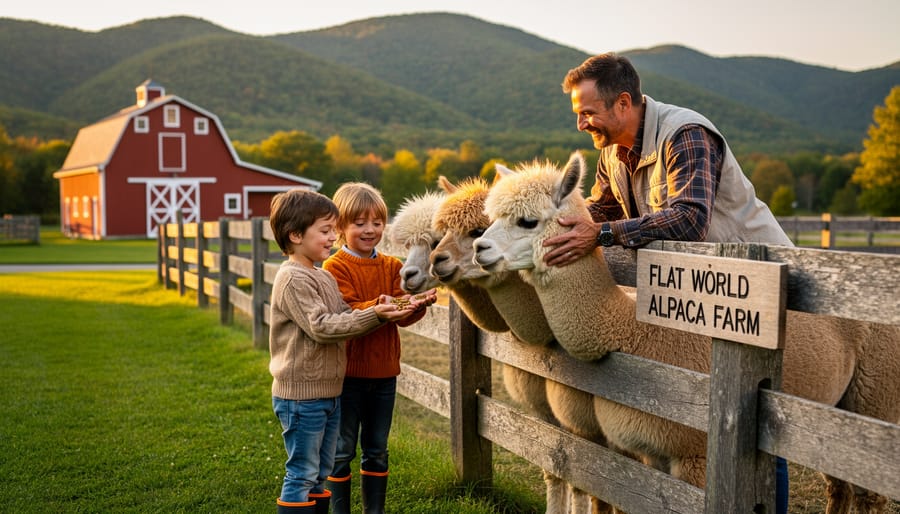
Nestled in the heart of Vermont’s scenic countryside, Flat World Alpaca Farm has been welcoming visitors since 2003, when founders Sue and Gary began their adventure with these gentle creatures from South America. The farm sits on rolling pastures that showcase Vermont’s natural beauty in every season, from snow-dusted winter wonderlands to vibrant fall foliage.
What truly sets this destination apart is the intimate, hands-on approach to alpaca encounters. Unlike typical petting zoos where you observe from a distance, here you’ll get genuinely close to these curious animals. The farm maintains a herd of about 30 alpacas in various colors, from creamy white to rich chocolate brown, and even some with striking spotted patterns. Each alpaca has its own personality, and the owners know them all by name.
The educational component runs deep here. Sue and Gary don’t just show you alpacas; they share stories about alpaca behavior, explain the incredible properties of alpaca fiber (it’s hypoallergenic and warmer than sheep’s wool), and demonstrate the shearing process when timing’s right. Kids especially love learning how alpacas communicate through a series of hums and the occasional playful spit.
What makes this farm particularly special for Vermont visitors is the authenticity of the experience. This isn’t a corporate operation with scripted tours. You’re visiting a working farm where the animals are raised with care, and the fiber is processed into beautiful products right on-site. The farm store features items made from their own herd’s fleece, including soft scarves, cozy socks, and warm hats.
The relaxed pace here appeals to families looking for something different from the usual tourist spots. There’s no rushing through. You can spend time simply watching the alpacas graze, ask questions, and enjoy the peaceful Vermont countryside. Local visitors often return seasonally, making it a beloved tradition rather than a one-time stop.
Meeting the Alpacas: What to Expect During Your Visit
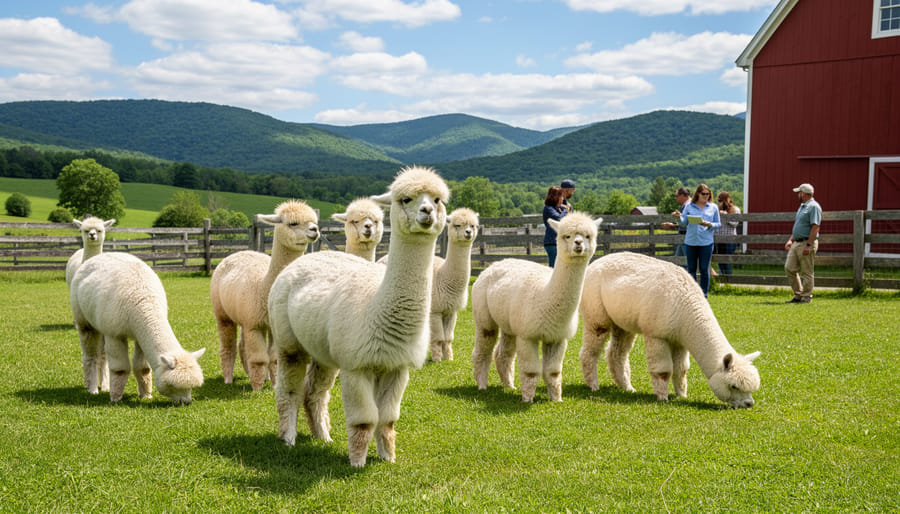
Stepping onto an alpaca farm in Vermont for the first time is like entering a world where curious eyes and gentle humming greet you at every turn. These fuzzy creatures have personalities that range from boldly inquisitive to sweetly shy, and you’ll quickly discover that each alpaca has its own quirks and preferences.
Most Vermont alpaca farms offer hands-on experiences that let you get up close with these charming animals. You’ll typically start with a brief orientation where farm staff explain alpaca behavior and safety basics. Don’t be surprised when several alpacas waddle over to investigate you right away. They’re naturally curious, though some prefer to observe newcomers from a distance before deciding you’re worth approaching.
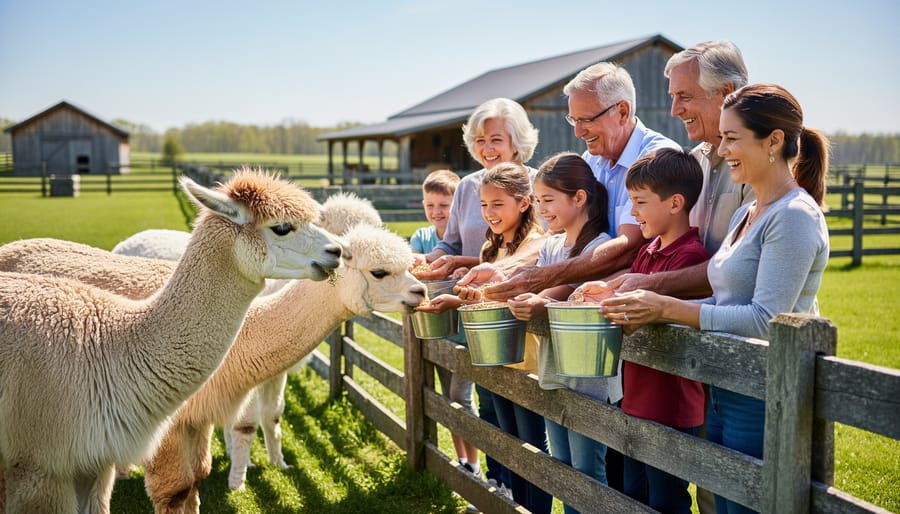
Feeding time is the highlight for most visitors. Farm staff will provide you with special alpaca-safe treats or hay, and you’ll feel those soft, gentle lips tickle your palm as they munch away. The key to a successful interaction is moving slowly and staying calm. Alpacas are prey animals, so sudden movements or loud noises can startle them. Approach from the side rather than head-on, and let them come to you whenever possible.
Understanding alpaca body language makes your visit much more enjoyable. When their ears are forward and they’re making soft humming sounds, they’re content and curious. If you see them spit, don’t take it personally. They’re usually aiming at each other over food disputes, not at visitors. According to experts on handling llamas and alpacas these animals respond best to patient, quiet interactions.
Photo opportunities abound throughout your visit. Those long eyelashes and expressive faces make alpacas natural camera subjects. Get down to their eye level for the most engaging shots, and don’t hesitate to ask farm staff to help position you near the friendliest alpacas.
Spring and fall offer ideal visiting conditions. The weather’s comfortable, and baby alpacas (called crias) are often frolicking around the pastures in late spring and early summer. Just remember to dress in layers since Vermont weather changes quickly, and wear closed-toe shoes suitable for farm terrain.
Educational Opportunities and Farm Tours
Vermont alpaca farms offer hands-on learning experiences that captivate visitors of all ages, and a visit here puts you face-to-face with these gentle creatures while discovering the ins and outs of sustainable livestock farming. Guided tours typically run throughout the day, led by knowledgeable farmers who’ve spent years working with alpacas and love sharing their expertise.
During your visit, you’ll learn the surprising differences between alpacas and llamas (yes, there’s more than just size). Guides explain breeding practices, the intricacies of herd management, and the daily care routines that keep these animals healthy and content. Kids are especially fascinated by feeding time and the quirky personalities each alpaca displays.
The fiber processing demonstrations are genuine crowd-pleasers. You’ll watch raw fleece transform through shearing, cleaning, carding, and spinning into the luxuriously soft yarn these animals are famous for producing. Many farms let children try their hand at spinning wheels or hand-carding tools, making it a memorable tactile experience. Some tours even include visits to the farm store where you can see finished products like scarves, hats, and blankets.
What sets these educational programs apart is the emphasis on sustainability. Farmers explain how alpacas have a lighter environmental footprint than many livestock species, with padded feet that don’t damage pastures and highly efficient grazing patterns. You’ll also discover how alpaca manure serves as a sustainable solution for soil health enriching gardens without the harsh chemical additives.
Tours usually last 45 minutes to an hour, giving families plenty of time to ask questions, snap photos with the herd, and absorb the peaceful farm atmosphere. It’s educational without feeling like a classroom lecture, making it perfect for curious young minds and adults alike.
Farm Store and Alpaca Products
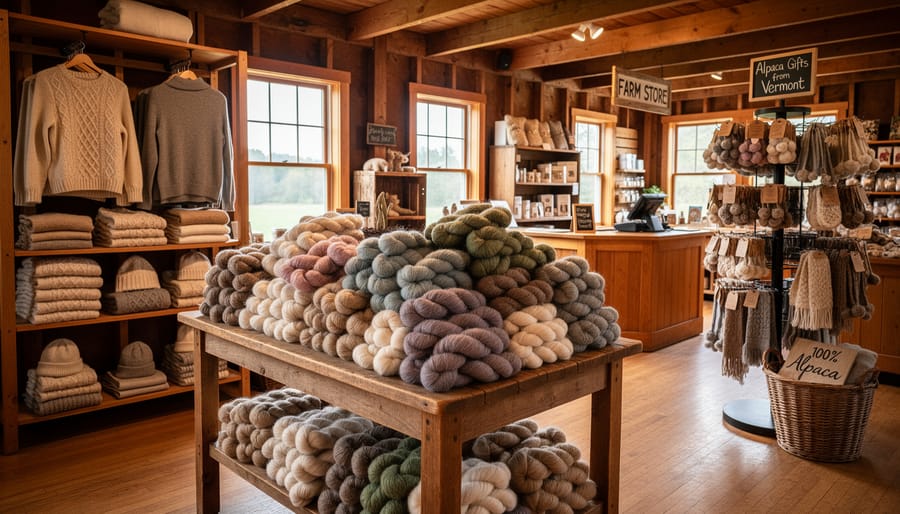
No visit to an alpaca farm in VT is complete without browsing the farm store, where you’ll discover why alpaca fiber has earned its reputation as one of nature’s finest textiles. The moment you step inside, you’re surrounded by the softest yarns, cozy scarves, and beautifully crafted items that showcase what makes alpaca products special.
Alpaca fiber is warmer than wool, hypoallergenic, and incredibly lightweight. Unlike sheep’s wool, it doesn’t contain lanolin, making it perfect for people with sensitive skin. The farm’s fiber testing results demonstrate the exceptional quality that comes from well-cared-for alpacas and careful processing.
You’ll find hand-spun yarn in natural colors ranging from creamy white to rich chocolate brown and charcoal gray. These earthy tones come straight from the animals themselves, no dyes needed. Many visitors stock up on skeins for their knitting projects back home.
The clothing selection includes hats, mittens, sweaters, and socks that’ll keep you warm through Vermont’s coldest winters. There are also smaller gift items like alpaca teddy bears, dryer balls, and beautifully soft scarves that make perfect souvenirs. Prices are reasonable considering you’re buying directly from the source.
Here’s an insider tip: ask about which products are made from fiber harvested right there on the farm. The staff loves sharing stories about which alpaca contributed to your purchase. It adds a personal connection you won’t find at typical tourist shops, making your Vermont alpaca farm treasure even more meaningful.
Planning Your Visit to This Vermont Alpaca Farm
Ready to visit Vermont’s charming alpaca farms? Here’s what you need to know to plan your perfect trip.
Most alpaca farms in Vermont welcome visitors seasonally, typically from late spring through early fall when the weather is mild and the alpacas are most active. Call ahead to confirm hours, as many farms operate by appointment or have limited walk-in availability. Some farms offer free admission for basic visits, while others charge a small fee for guided tours or special experiences like fiber workshops.
| Season | Typical Hours | Admission |
|---|---|---|
| Spring/Summer | 10am-4pm (Fri-Sun) | $5-10 per person |
| Fall | By appointment | Varies by activity |
| Winter | Limited/Closed | Special events only |
Dress for the occasion. You’ll be walking on farm terrain, so skip the fancy shoes and wear sturdy, closed-toe footwear. Layer your clothing since Vermont weather can surprise you, even in summer. Bring sunscreen, water bottles, and a camera to capture those irresistible alpaca faces.
Here’s an insider tip: visit during morning hours when the alpacas are most energetic and interactive. They tend to rest during the hot afternoon sun. If you’re traveling with young children, pack hand sanitizer and prepare them for gentle interactions. These farms are working operations, not petting zoos.
Vermont’s alpaca farms make excellent additions to a longer trip. Combine your visit with Fort Smith area attractions for a full day of outdoor adventure. Many farms are located near scenic byways and covered bridges, perfect for exploring the area after meeting the alpacas. Check local farm websites for seasonal events like shearing demonstrations or fiber festivals that offer unique experiences beyond standard tours.
A visit to an alpaca farm in VT offers something truly special, and Flat World Alpaca Farm delivers an experience that stays with you long after you leave. There’s something magical about standing face-to-face with these gentle creatures, watching kids light up as a curious alpaca nuzzles their hand, and learning about these remarkable animals from people who genuinely love what they do.
This isn’t just another stop on your Vermont itinerary. It’s a chance to slow down, connect with nature, and create memories your family will talk about for years. The farm fits perfectly into any Fort Smith outdoor experience whether you’re planning a weekend getaway or just looking for a memorable afternoon activity.
The best part? You don’t need any special knowledge or experience to enjoy your time here. The friendly staff welcomes everyone, from first-time visitors to alpaca enthusiasts who can’t get enough of these charming animals.
Ready to meet the herd? Check the farm’s visiting hours, bring your camera, and prepare for an adventure that’s equal parts educational and heartwarming. Your alpaca encounter awaits, and these curious, gentle creatures are ready to welcome you to their Vermont home.